Finding an Anchor in the Shelter
“Hi Sivan, in our building in Kiryat Shemona, we decided that whenever there is a siren and we go down to the shelter, we will learn one halachah together in preparation for Pesach.”
That is what Chen Lilienthal of Kiryat Shmona wrote to me before Pesach. Since then, I have been following what is happening in her building on Solomonovich Street in the northern city. Chen, her husband Avi, and their six children chose to move there several years ago. “The security situation since October 7 has only strengthened that decision. We understood how historic and meaningful it is that we moved here, with the hope of seeing a real change in thinking about northern Israel.”
Six families live in the building. The Schwartz family started the initiative, and everyone joined in. “There were days with three or four sirens. But there were also days with fifteen, and on those days, we made serious progress in our learning. Every siren gives us another halachah. It has become something positive, something that adds meaning, something we look forward to. All the neighbors enjoy it. The children have become experts, and over Pesach they really knew what to do, because ‘that’s what we learned in the bomb shelter.’”
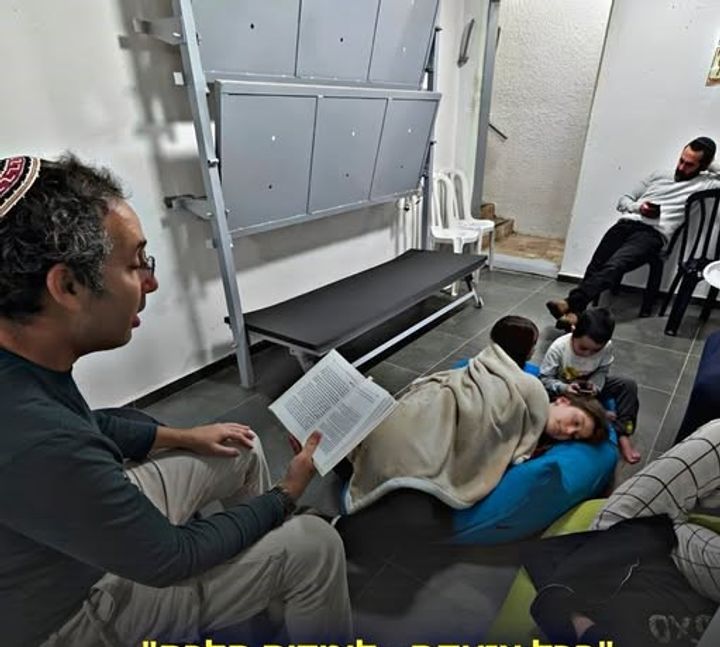
Learning in the bomb shelter
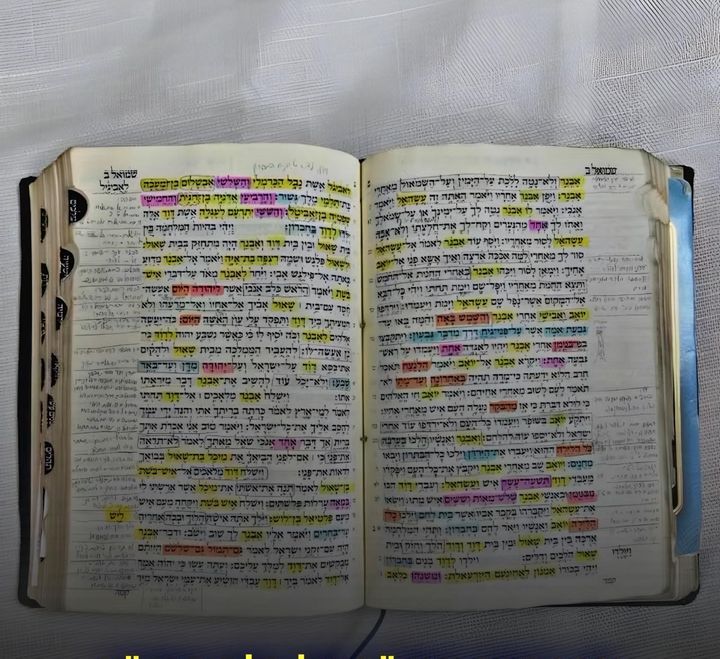
The Tanach belonging to Bible Quiz winner Hodaya Cohen
This week, I checked in to see how they were doing. They have since completed the laws of Pesach and have moved on to the laws of Sefirat HaOmer, which is now underway.
It is amazing. They could have told themselves that their lives are in chaos right now, that this is not the time, that the children are not really learning anything anyway. It would have been easier to sit in the shelter scrolling through news updates and posts on WhatsApp. But they decided to create an anchor, a point of stability, through Torah learning precisely in a time of challenge, and to educate their children that way.
And soon, they hope, they will have many new neighbors. “Personally, I am full of hope and optimism,” Chen says. “Not only are we not moving from here, demand is at an all-time high. Many large families are looking for homes in the city. There is tremendous interest.”
Indeed, in recent days, the “Tzafona” initiative of Keren Kehillot held a Zoom session for Israelis who are interested in moving north specifically now, as a personal decision that is also a national one. The organizers were pleasantly surprised; more than 120 families took part. “People are not waiting for the situation to change. They are choosing to take part in shaping it,” said project coordinator Yuval Chovev, who moved to Kiryat Shmona this year with his wife and five children.
The children in the building hope to learn the laws of Shavuot at home. But this week, they taught me a lesson too.
A Tip from the International Bible Quiz Champion
I recently had the opportunity to interview International Bible Quiz champion Hodaya Cohen, together with her mother, Hila. I also got a glimpse of Hodaya’s personal Tanach, which she used to prepare for the competition. Each topic is highlighted in a different color, and the pages are marked with countless notes and summaries, reflecting years of love and consistency.
When I asked them for a few takeaways, Hodaya shared that she studied for the quiz over the course of three years, dedicating her learning to the success of the Jewish people. This is how she put it:
“We need to believe in ourselves, that God gives us abilities we don’t always see, but they are there. I saw how prayer can elevate those abilities, and how my parents’ confidence in me gave me strength. I worked hard and discovered that it’s possible. I think we’re simply not aware of the power of our minds and our souls.”
Her mother added: “This past year, I learned from Hodaya to value time. Sometimes we’d have five free minutes while waiting for something. She would say, ‘Mom, in five minutes you can finish two chapters.’ Instead of wasting time, I saw how every minute can be used well.
“As parents, we never made her feel that she had to win. We celebrated her learning, her love for Torah. We told her that no matter what place she reached, what mattered most was her effort. The learning itself, the connection to the sacred words of the Tanach—that is the real victory.”
Parashat Emor: Beyond Time Management
How do you know if something truly matters to you? You make space for it in your schedule. You set aside time. You give it a fixed place in your day.
This simple but profound idea appears in this week’s parashah, Emor, which mentions the special days, the festivals and sacred times of the Jewish people: Shabbat, Pesach, Shavuot, Sukkot, the Counting of the Omer, Rosh Hashanah, and Yom Kippur. It is as if the Torah is placing these holy days directly into our calendar.
Since the beginning of Creation, Shabbat has been a day of rest and holiness. Do we remember to build into our week a sacred pause, a time to recharge and reconnect? On Yom Kippur, we were first granted forgiveness and atonement. Do we return to that elevated space, year after year?
The answer is yes. It is remarkable to read this parashah and see how, thousands of years later, the Jewish people continue to observe these very same special days, keeping them alive in our shared calendar and drawing strength from them.
Today, there is so much talk about “time management.” But the parashah is really teaching us something deeper: value management. The things that truly matter to you become a permanent part of your calendar.
May we merit to fill our days with what truly brings order and meaning into our lives.