In Israel, 'Ein kemach, ein Torah" is an expression often quoted in discussions concerning Haredi men leaving the Beis Medrash and going to work to support their families. However, it is not simple for someone from an Israeli Haredi background who decides to "go to work" to succeed in a secular environment.
Yaakov Barzilai from Beit Shemesh, married with six children, is one success story. Barzilai is working on his doctorate in Computer Science Education while working in the Prime Minister's Office, responsible for computer networks and security. "I am eternally grateful to KEMACH for facilitating the process which enabled me to maximize my potential while remaining true to Torah values."
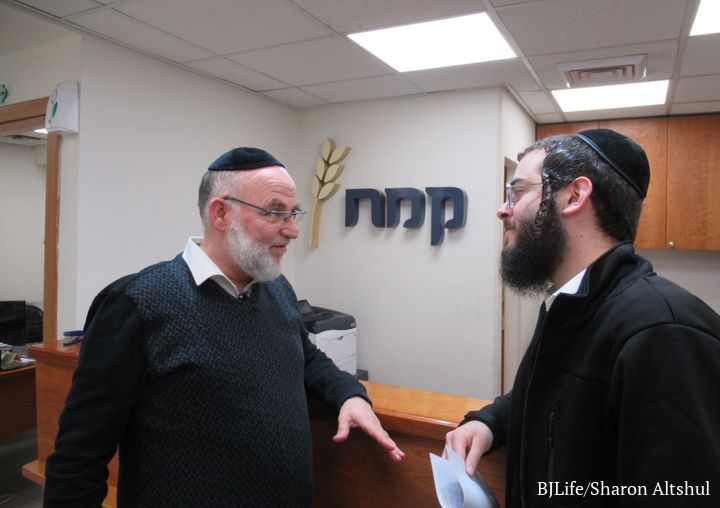
In January 2007, Mr. Leo Noé of London, Mr. Eli Horn of Brazil and Mr. Aaron Wolfson in the US came together with a desire to solve the issue of parnasa in the Israeli Haredi population. Working together with Haredim in the various communities, and offering scholarships to those individuals with no background in secular studies was only a first step for the Israeli non-profit named KEMACH. KEMACH's priority is to guide Haredi students, and to help them succeed without compromising their religious or family values, so they can complete a degree and enter a rewarding career. KEMACH is an acronym for the words “Kidum Miktzo’i Charedi” - Professional Haredi Employment.
Under the leadership of Mordechai Feldstaine, a graduate of the Hevron Yeshivah, who has served as Director-General from its conception, KEMACH has expanded and branched out to help 35,000 men and women.
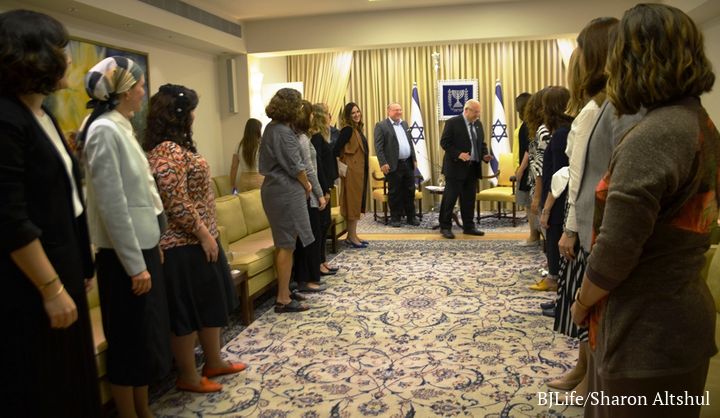
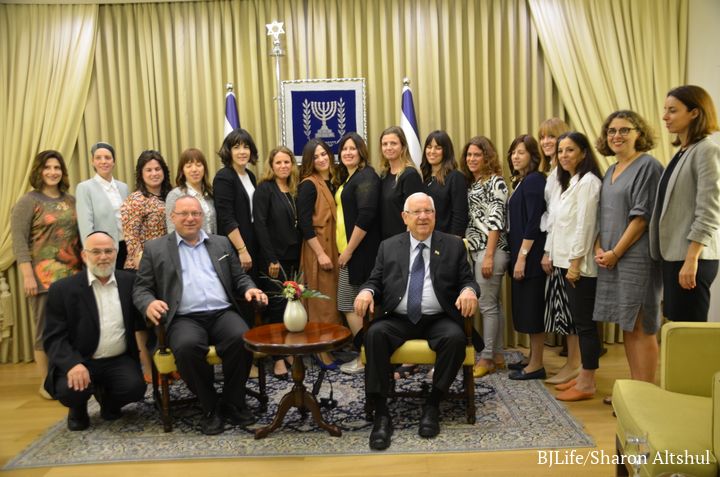
The women's Movilot professional leadership program in cooperation with the nonprofit Gesher was recognized and hosted by President Reuven Rivlin at Beit Hanasi in September 2019. Six program cohorts, with 165 participants, have received an impressive 100% increase in salary. The select groups of Haredi women, aged 25-45, preparing to be leaders in their communities and workplaces, are mentored by senior female executives.
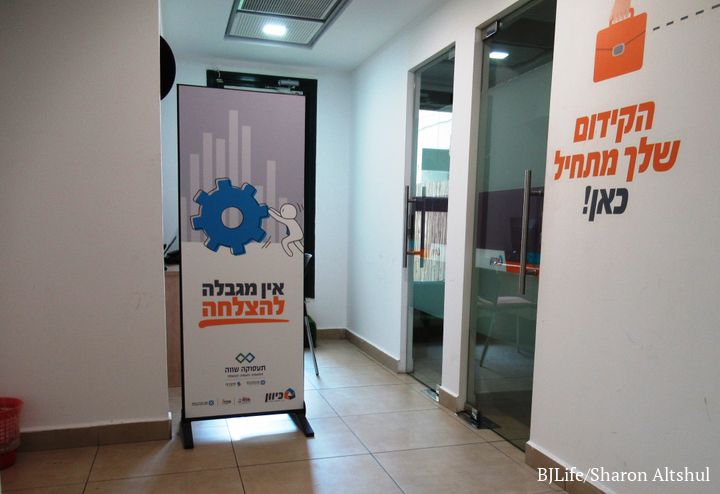
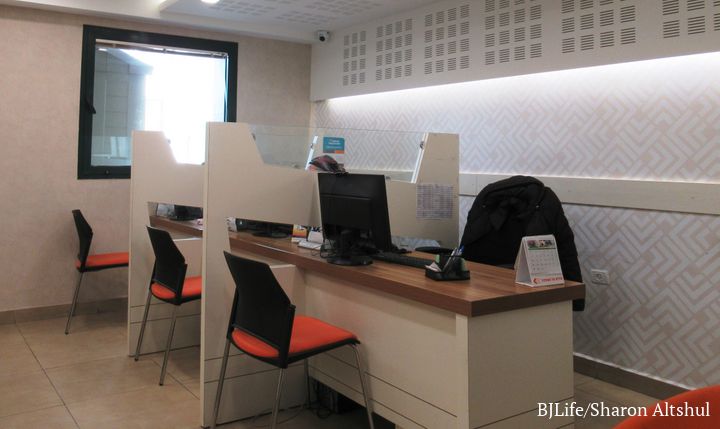
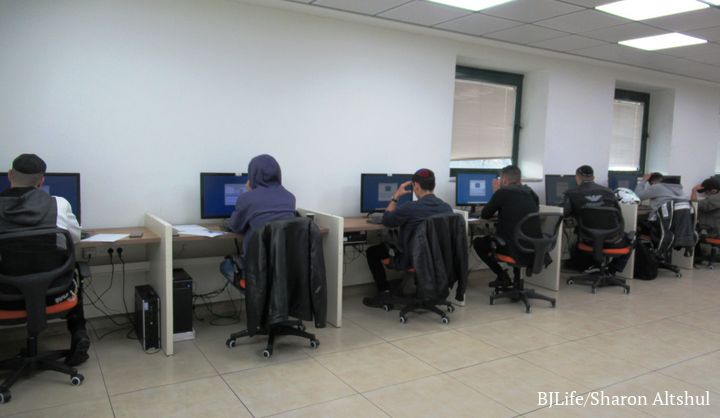
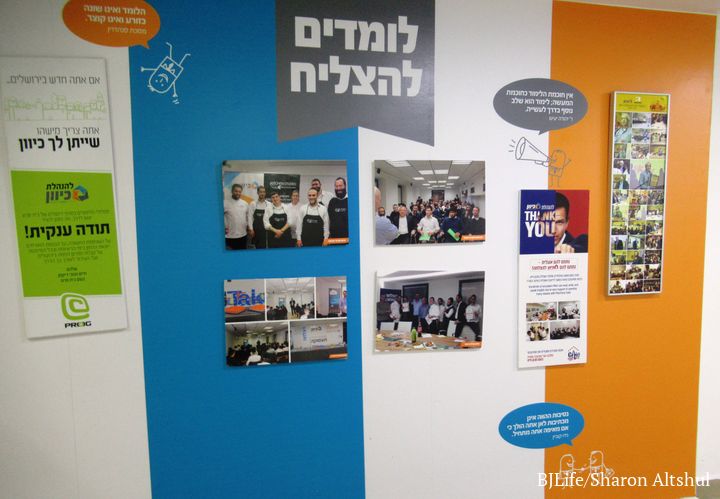
To start the process, KEMACH has a guidance center that employs a team of Haredi psychologists and career advisors. Last year they helped 600 students by providing career assistance through the Kivun Placement Center which opened in Jerusalem in 2014 in partnership with the Jerusalem Municipality and Ministry of Labor and Welfare. Aptitude testing is the first step. The 4-5 hour computerized comprehensive aptitude test is designed to measure an applicant's academic or vocational abilities. After the test, goals and cultural background are taken into consideration as well, along with capabilities.
Rabbi Zohar Balulu of Netanya learned in Kollel for 12 years, then worked for a few years to support his wife as she studied for a degree. After guidance, he decided to sign up for a nutritional guidance course, received help to obtain a scholarship, and wrote the following thank you, "The KEMACH Foundation has helped me open a new story in my life which could not have happened without your support."
Paying tuition and supporting families while studying is a serious problem for low-income families. KEMACH reports it has to turn away thousands of scholarship students every year due to a lack of funds. The Israeli Council for Higher Education (CHE) partners with KEMACH and contributes NIS 12 million in 2019. With the government not functioning this past year, nonprofits' budgets have been frozen and nothing for new programs can be allocated.
Male guidance counselors advise the men, while female guidance counselors advise the women seeking jobs or higher-paying positions. Basic English, math, and computer skills were necessary for some 10,000 Kivun male applicants. It has been reported that 54% of Haredi men are currently working, while for women the latest estimate is 73%.
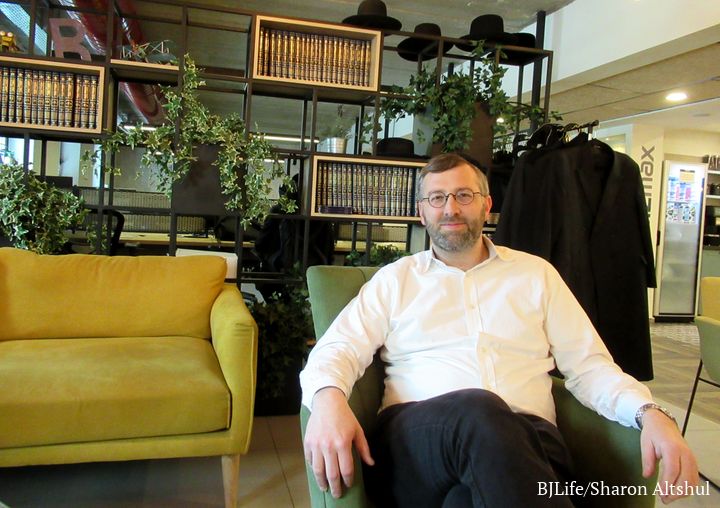
Senior Director of Strategic Partnerships Rabbi Nechemia Steinberger benefited from KEMACH's guidance, educational support, and training programs. Out of 300 Israeli civil servants, Steinberger was the first Haredi to enter the government human resource office for Israeli government employment. He worked in the government office for two years in a role to increase Haredi workers in civil service, extremely underrepresented at less than 1%.
Kivun guidance opportunities Kishrei Kehillot, now exist in 26 communities, from Amshinov to Vishnitz, both Chassidish and Litvak. For example, a Belzer Hasid gets advice from a trained Belzer advisor to pursue a certain vocation or course training.
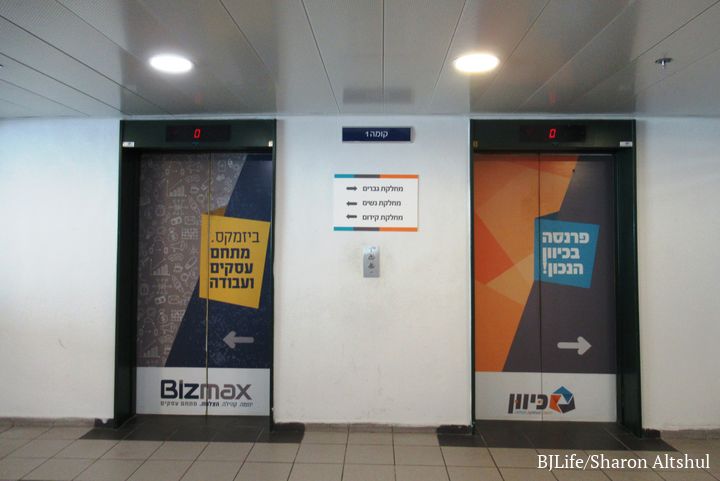
In a short time of five years, Kivun has assisted over 20,000 people, 12,000 men, and 10,000 women. The impact on the Israeli economy is estimated to 4.1 billion shekels impact each year. Over 14,000 people have found jobs in more than 600 companies, organizations, and government offices.
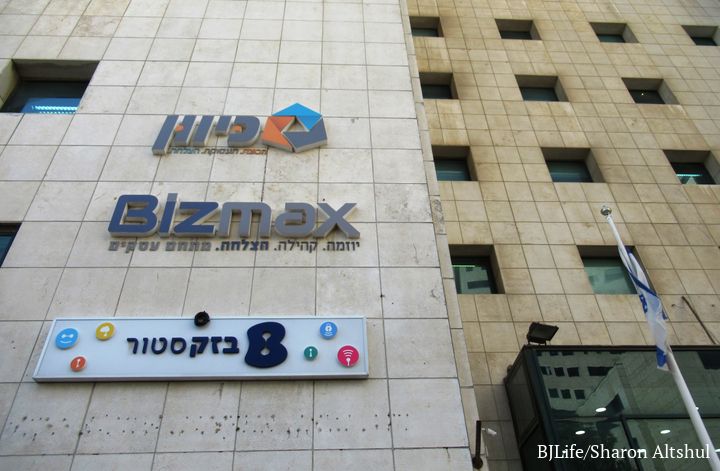
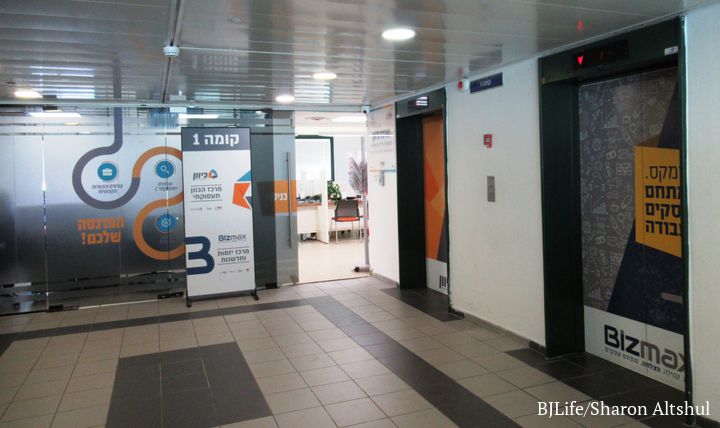
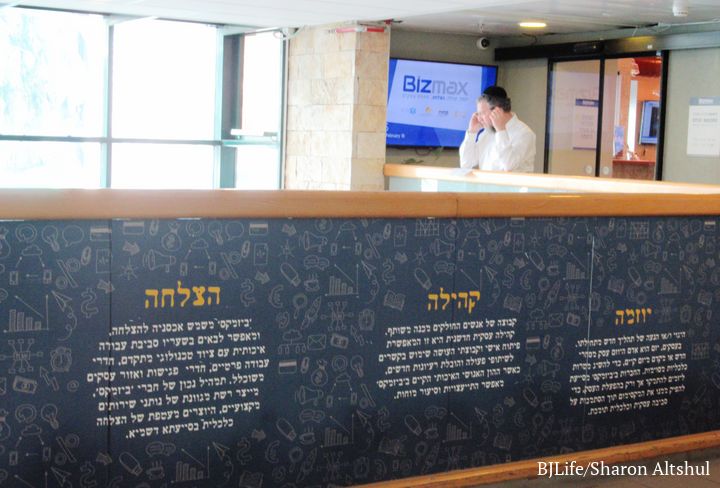
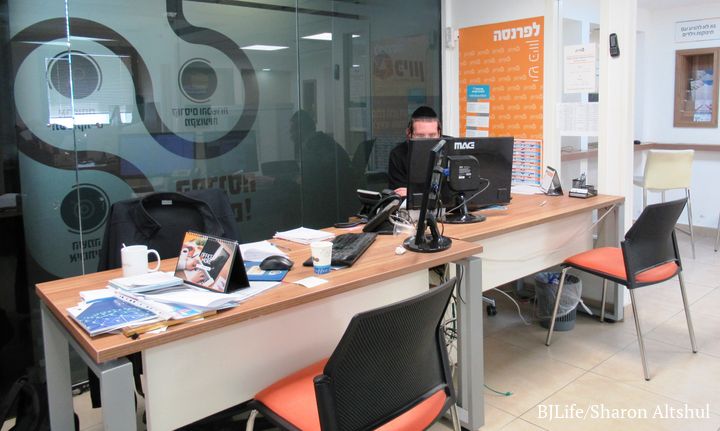
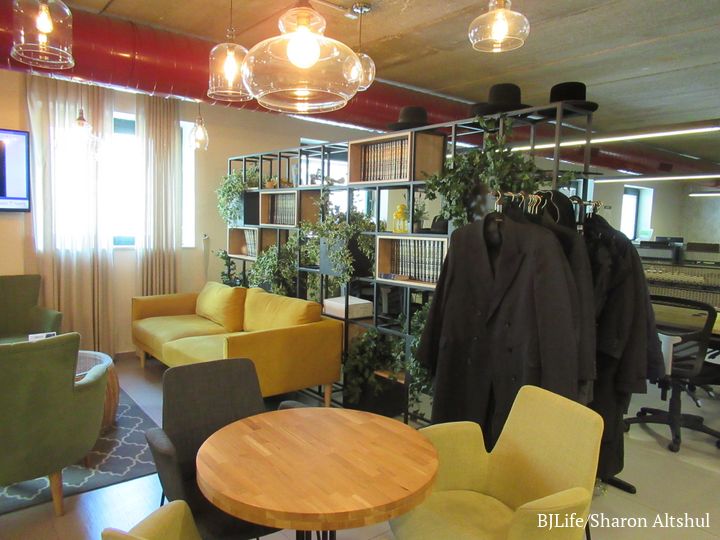
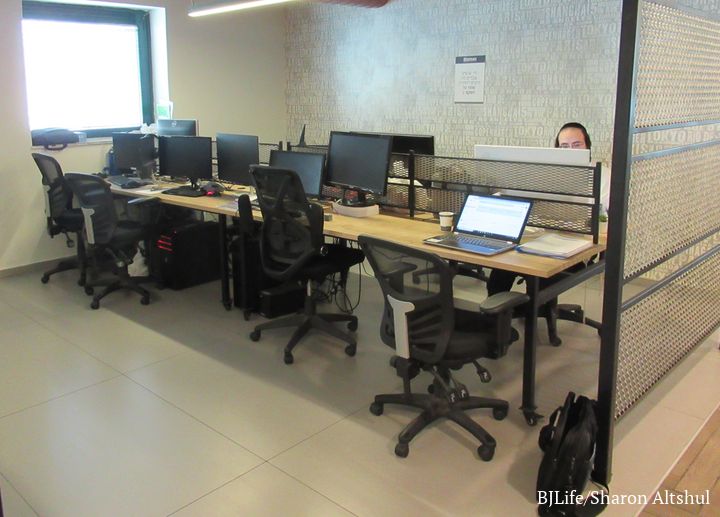
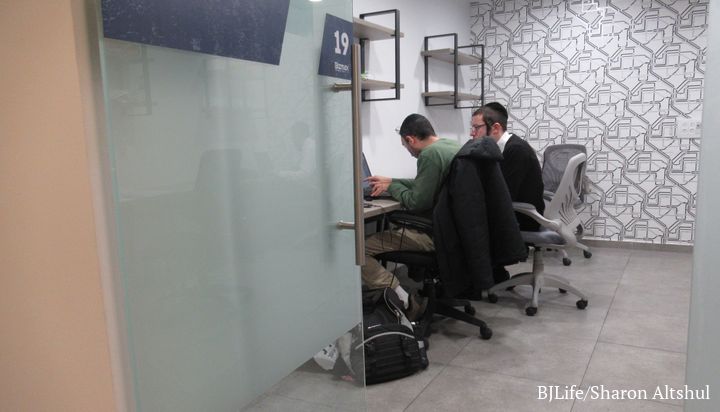
In 2017, Bizmax was developed with the Achim Foundation and Jerusalem Development Authority to be a Haredi co-working space and an incubator for Haredi entrepreneurs, with volunteer mentors to support the Haredi businesses. One-hundred companies are growing and supporting each other.
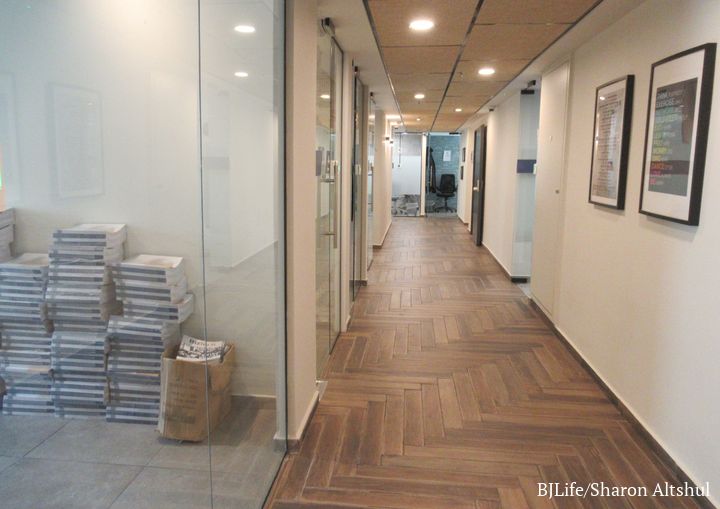
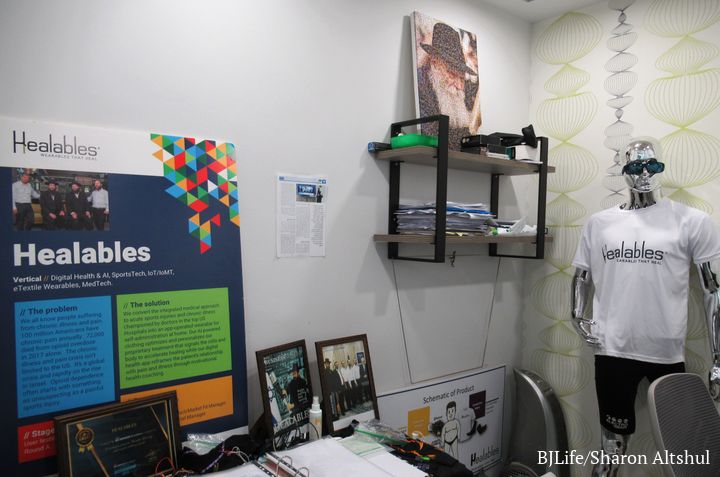
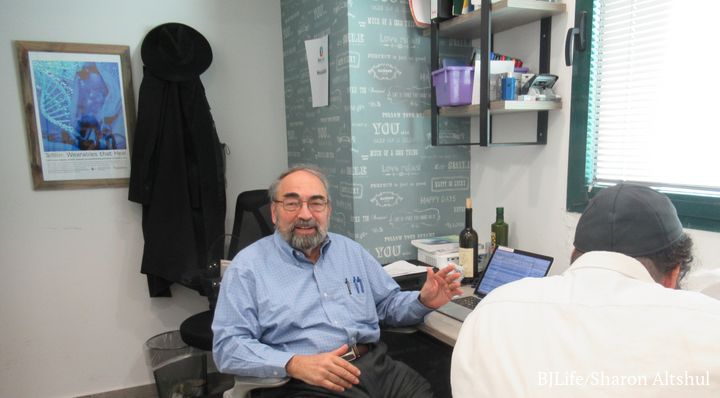
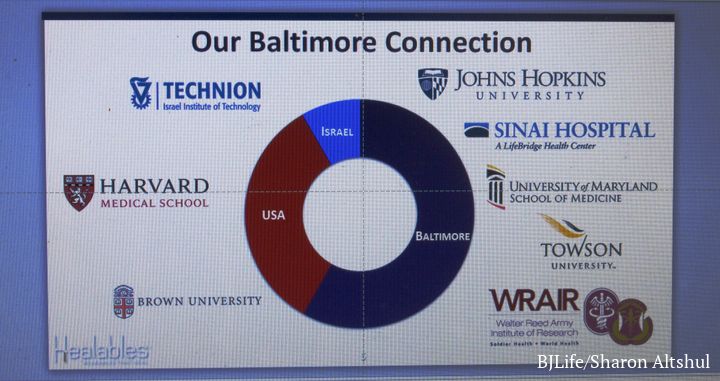
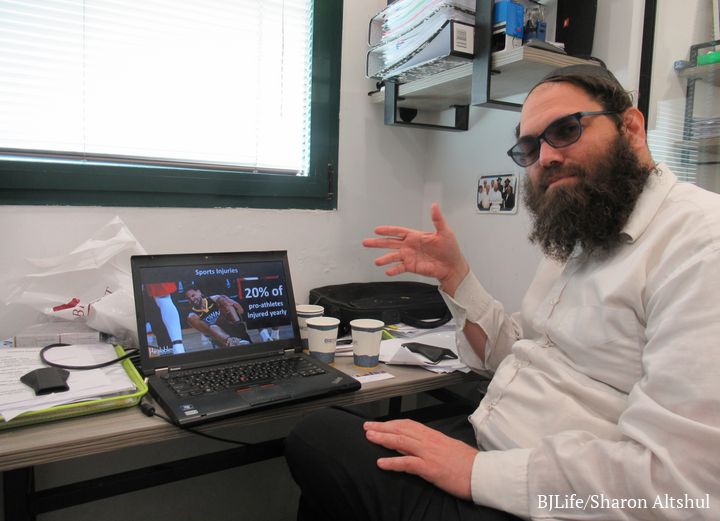
On a tour of Bizmax office space, BJL recognized former Baltimore resident Dr. George Lowell working on a project for the Israel Army at a start-up called Healables - wearables that heal. The company's CEO and Founder, Moshe Lebowitz, is Lowell's son (formerly known as Avi Lowell). The Healables mission is to accelerate healing, treat chronic illness and by extension to relieve pain. Top tier medical facilities in the USA offer a team and integrative approach to chronic illness and pain management. The Healables Digital Health approach enables remote monitoring and adjustment by practitioners and makes their e-textile wearable devices accessible and affordable for home use. The Healables new slick "electroceuticals" were designed and 3D printed by David Jakubowic, a talented industrial designer they met at Bizmax. As part of preparing their medical device for FDA De Novo clearance, Healables has already passed the human use committee (IRB) at The Edith Wolfson Medical Center in Holon and will soon begin recruiting for a clinical trial on osteoarthritis there. Healables is also collaborating with the Hadassah Medical Center in Jerusalem on a clinical trial for diabetic neuropathy. For their sports device, Healables has set up BETA testing with one NBA team so far as well as players from the NFL and MLB. Corporate attorney Abba Poliakoff is one of Healables advisors. With 100 million Americans suffering from chronic pain each year and opioid deaths growing annually, healing the source of the pain for lasting relief is important.
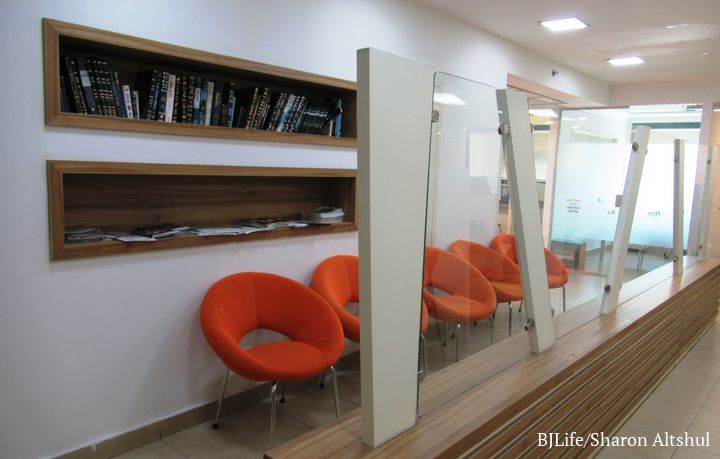
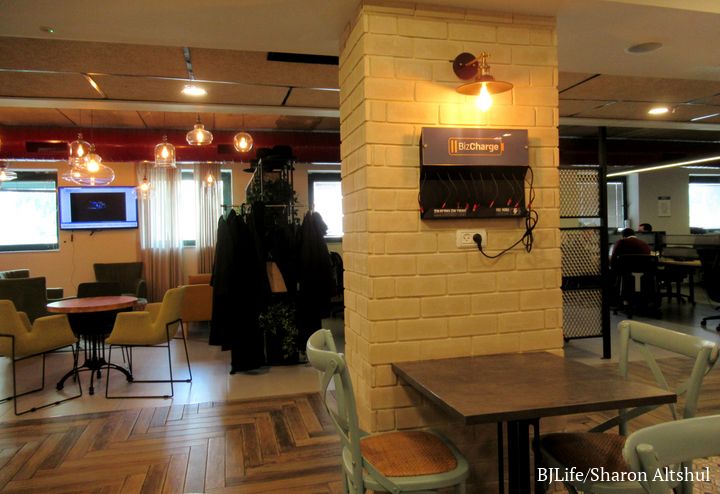
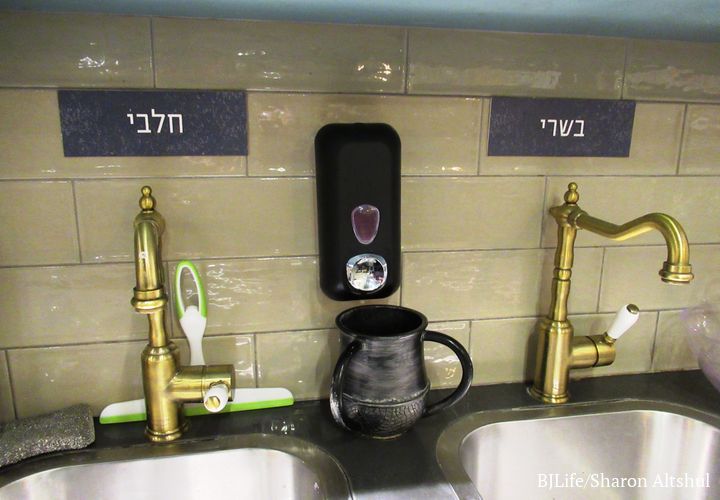
The Hub workspace is light and bright, conveniently located, clean and modern, and has good coffee. In its kitchen area, are two clearly labeled sinks - one for meat and one for milk. Bizlabs, under Managing Director Gil Shourka, is an accelerator program designed to nurture and support the select group of hi-tech startup companies in the Bizmax Hub.
Training Haredi doctors and medical specialists is another issue of concern. Less than 1% of Israel's medical students come from the Haredi community. A shortage of male dental assistants and nurses is a serious issue in the Haredi community.
With all the business and secular intiatives, a Beis Medrash night seder program enabling Haredi men who work, to be able to continue their learning at night has been announced.
Rabbi Steinberger is planning a March trip to the United States, including Baltimore, and said he looks forward to meeting with Dr. Jonathan Ringo, as well as Rabbi Moshe Hauer who serves as a Board Member of the KEMACH Foundation.