Posted on 02/02/26
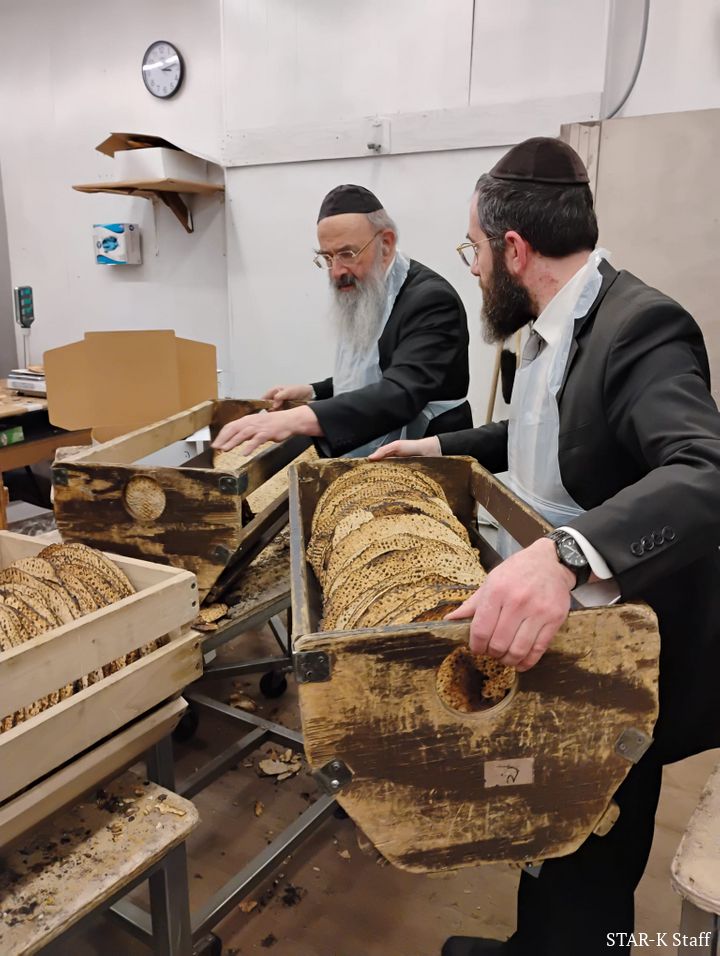
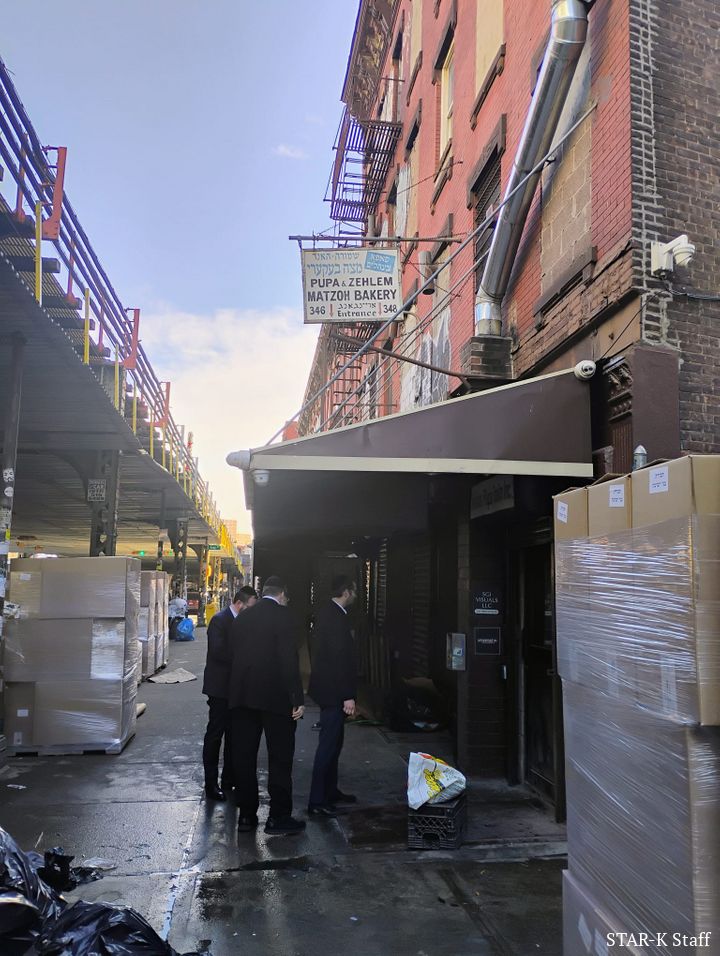
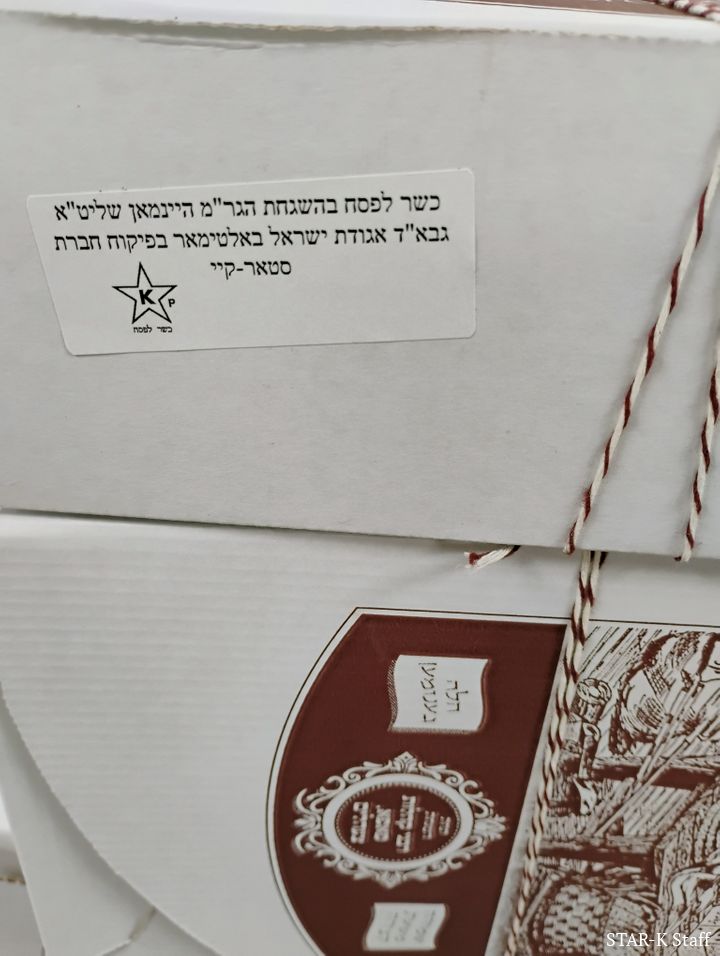
Baltimore, MD - Feb. 2, 2026 - For many years, the Mechina of Yeshivas Ner Yisroel - together with STAR-K Rabbinic Administrator HaRav Moshe Heinemann, shlit"a, and STAR-K staff members - has baked hand shmurah matzah at the Pupa-Tzelem Matzah Bakery in Williamsburg. This year, STAR-K decided to make an additional run exclusively for STAR-K staff orders to take some of the pressure off from the Mechina, as demand exceeds supply. In approximately 3 hours, 350 pounds of shmurah matzah were produced and affixed with a special STAR-K run sticker.
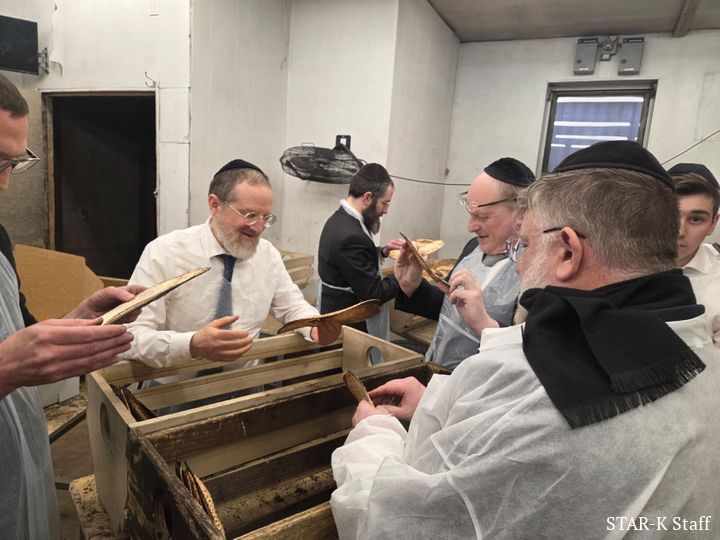
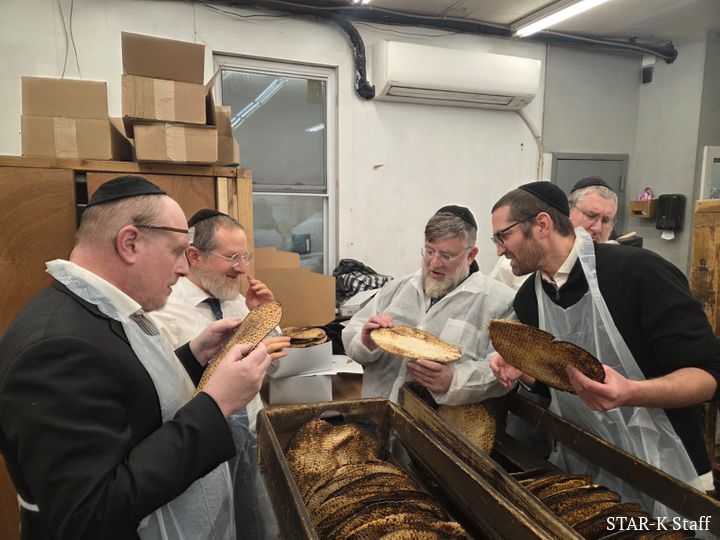
STAR-K Kashrus Administrators members who made the trip, on January 22, were Rabbi Mordechai Frankel, Rabbi Zvi Goldberg, Rabbi Zvi Holland, Rabbi Moshe Shuchman, and Rabbi Sholom Tendler, from STAR-K’s corporate headquarters; and Rav Shmuel Heinemann, Rabbi Shlomo Chaim Heinemann, and Rabbi Tzvi Shaul Goldberg of STAR-K’s East Coast offices.
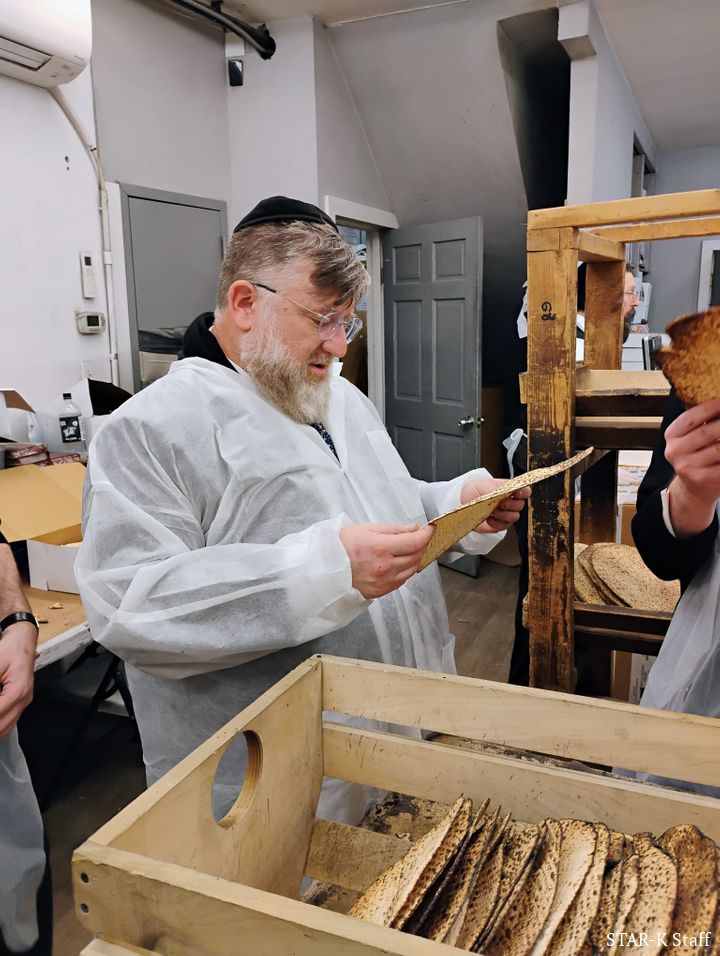
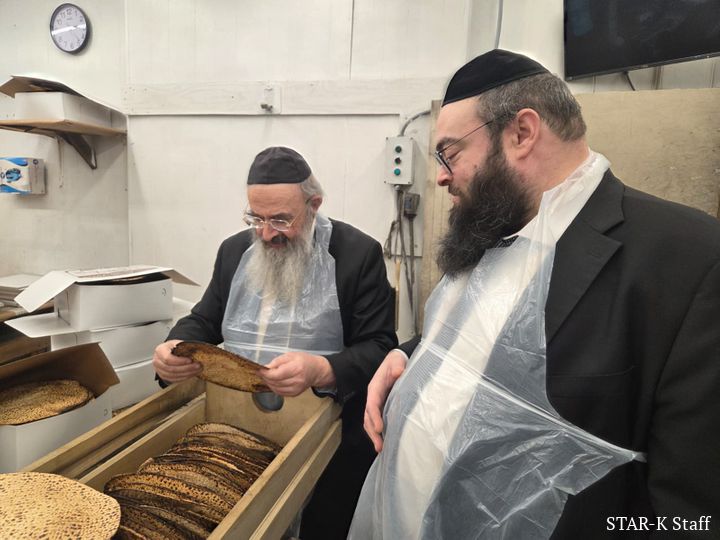
Although the bakery has its own mashgichim, STAR-K Kashrus Administrators oversaw this production to ensure it met HaRav Heinemann’s personal standards. Notes the Rav, despite all the precautions and attention to detail by bakeries involved in making matzos, it is possible that the matzos may still have issues. Although these problems can exist in both hand- and machine-baked matzos, they are more prevalent in the hand-baked matzos.Therefore the extra checking of the STAR-K staff is beneficial.
Matzah Kefula is one such problem area. If there is an area on the matzah that is bent over, the doubled over portion is not Kosher l’Pesach. According to the Rav, one must remove and discard this area together with a one-inch margin of regular matzah. This is required, even if the bent over part is very small. However, if a matzah is bent over but the two layers do not actually touch one another then the matzah remains kosher and removal of this area is not required.
In handmade matzos, the dough is rolled out manually. At times during the rolling process, some dough may get slightly doubled over, creating a crease in the dough. As the rolling process continues, the crease gets flattened, and a noticeable line remains where the crease had been. If one finds a matzah with a line on one side of the matzah and a corresponding line on the other side, one should assume that the dough probably doubled over during the rolling process, creating the crease. Although this is not a true matzah kefula, as the creased matzah was rolled further until it had a uniform thickness, it is customary to remove and discard the creased area.
Although the matzos were primarily made by the Pupa-Tzelem matzah bakers, themselves, STAR-K staff members did help with things like pouring the prepared special water into the flour -- mayim shelanu(well water which was kept overnight) is used for Pesach matzos, rather than regular municipal water. Some of the rabbonim carried the perforated matzahs on the poles towards the baking area so they could be quickly placed into the ovens. This entire process, from the time that water first comes into contact with the flour until the matzah is completely baked, takes just a few minutes.
“Matzah can sit up until 18 minutes before becoming chometz, but you’d rather not have it sit at all,” mentions Rabbi Zvi Goldberg. “So, if you can move the matzah into the oven a little faster, all the better. We did not do the actual kneading; that was done by the professionals. I was personally very impressed by them. Even at the end of the day, they didn’t seem to be slacking off at all; they were working very hard. We just wanted to check the matzahs after they came out of the oven…It is meaningful to personally inspect the matzos that we will be using at the seder. “