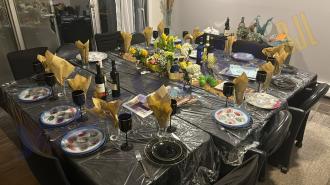
During the Second Temple, the Greek empire reigned (over Israel),1 and they (the Greeks) passed decrees against the Jews and (tried) to erase their religion, and did not allow them to carry out Torah (study) or the commandments. They put their hands on their property and their daughters. They entered the Temple, destroyed and made the pure unclean. The Jews were in great distress because of them and were much oppressed, until the G-d of their fathers had mercy on them, delivering them from their hands and saving them. Then overcame, the sons of the Hasmonean High Priest, (the Greeks) and killed them and saved the Jews from their hands. They appointed a king from the Priests, and the kingdom of Israel was restored for more than 200 years until the destruction of (the) second (Temple). When the Jews overcame their enemies and destroyed them, it was the 25th of Kislev2 when they entered the Sanctuary (inner room) and did not find pure (olive) oil in the Temple, except one jar sealed with seal of the High Priest, and it did not contain enough to light except for one day only. But they lit from it the lamps of the Menorah3 for eight days, until they could crush olives and produce a (new quantity) of pure oil. For these reasons, decreed the Sages of that generation that these eight days that begin on the 25th Kislev, will be days of joy and praise. One lights on them lamps at evening at the entrance to the houses, every evening of the eight nights to show off and demonstrate the miracle. These days are called ''Hanukah'' that is to say ''they rested'' (chanu) on the ''25'' ('th of the month) because on the 25th they rested from their enemies. and also because of those days they (re)-dedicated the house (Temple) which their foes had defiled. Also some say that it is a commandment to increase slightly the festive meals on Hanukah. Another reason is because the work of (building) the Sanctuary (in the desert) was completed in these days. One should tell one's children the story of the miracles that were done for our fore-fathers in those days, (see Josephus) However, these meals are not considered as part of the commandment unless one says at the meal songs of praise. One should increase charity in these Hanukah days, for this can help mend any defects in our souls. This charity, should be given particularly to poor Torah scholars. (KSA 139:1)
1) 352 BCE until 70 CE
2) 139 BCE
3) The Menorah was made of gold and had seven branches.

BaltimoreJewishLife.com (BJL) is proud to partner with STAR-K CERTIFICATION that realizes that there is no substitute for a person’s own Rav. In an effort to offer a possible solution, it has launched its Institute of Halachah as a public service. Over the years, the agency’s Kashrus Hotline has answered generic halachic questions from kosher consumers the world over, including inquiries regarding the kosher status of foods and certified Sabbath mode appliances. The formation of a separate official division within STAR-K testifies to the need for addressing these issues.
The Institute of Halachah is directed by HaRav Mordechai Frankel, under the guidance of HaRav Moshe Heinemann, STAR-K’s Rabbinic Administrator. It is an invaluable resource for a diverse array of rabbis to discuss general halachic matters, as well as gain access to source materials for shiurim and answers to congregants’ questions.
Shailos for regular or Kashrus shailos may emailed or discussed using this widget.